

Sweetheart
On patriarchy, male longing, and learning not to love sideways

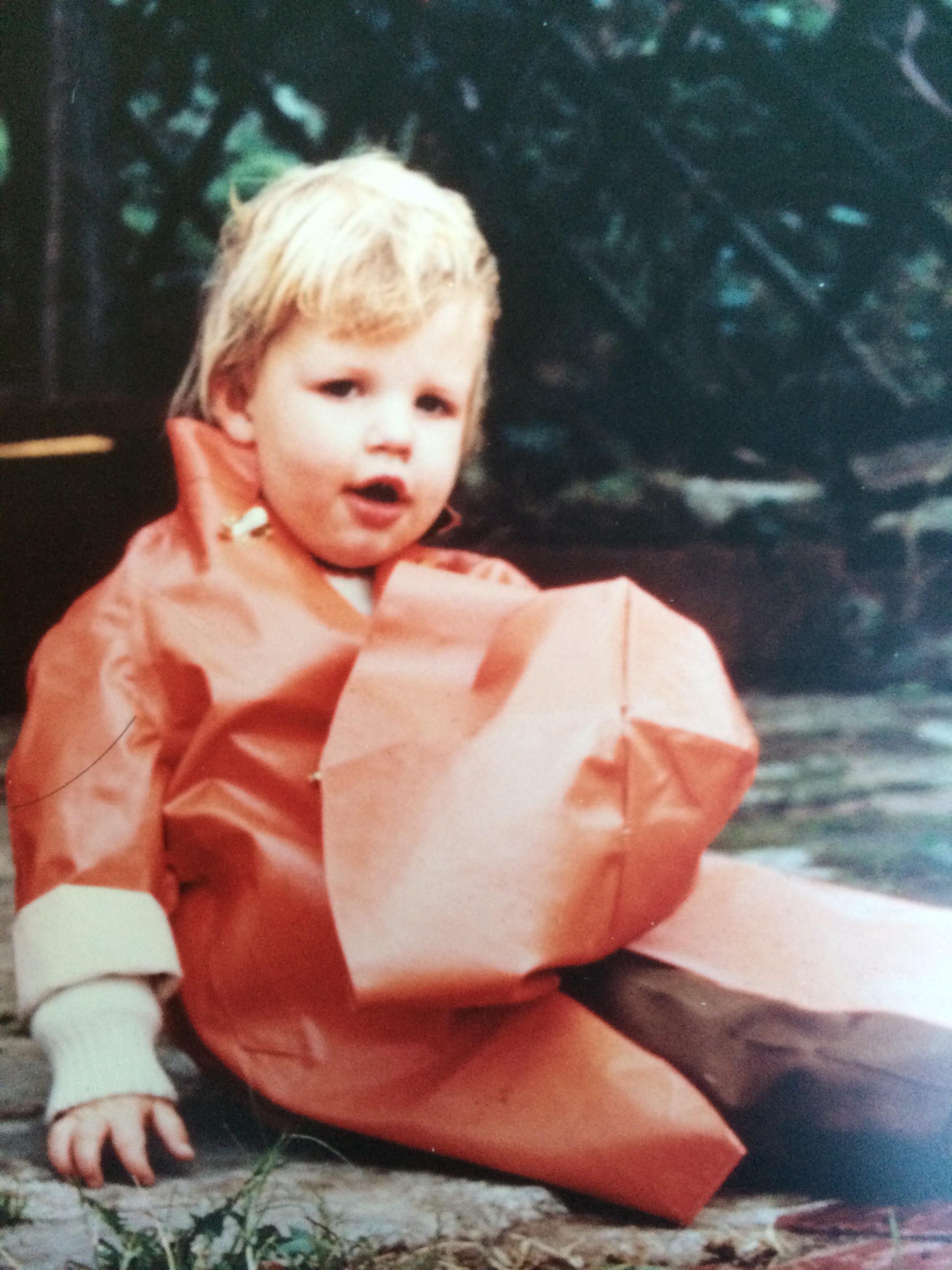
My aunt Jan called me sweetheart.
She called me that when I was small and sunburned and loud, when I was fourteen and awkward, when I was twenty and pretending I knew what I was doing, and when I was older and already carrying things I wasn’t proud of. She called me sweetheart right up until she passed a few months ago, and even in stretches when we hadn’t spoken for months, the word was waiting for me when we did.
She saw the best in me in a way that felt truly unconditional. With her, and with my grandmother and Aunt Ann, I never had to brace or edit myself. I could talk too much, be strange, be earnest, be funny, and none of it felt like a test. That was my first imprint of love. In kitchens and in sewing rooms I found enough oxygen to be accepted as myself; a gregarious, loving, curious kid who had yet to feel the full weight of society’s conditioning.
On the male side of the family, the air was different. My father lost his father at nine, which means whatever apprenticeship he might have had in tenderness was cut short, and the rest he had to assemble from fragments. A high school football coach of his became a kind of surrogate father for a while, offering discipline and direction, but outside of that he was building manhood without much modeling. My grandfather, on my mother’s side, had been raised by a rigid, authoritarian father and, for a time, carried that forward until LSD cracked his personality open in the mid-sixties. The post-hallucinogenic man I knew was more abstract, more absorbed in art and ideas than the man my mother grew up with, but he was still unpredictable. I never fully relaxed around him. He wasn’t outwardly threatening, but he wasn’t a source of unguarded warmth either. He had pretty firm ideas about how the world worked and how we should work within it, and there weren’t many conversations about fear or desire or doubt or love between us. Our generational transmission was limited to the practical and the bite-sized. We shared space more than we shared ourselves.
I think his sons, my uncles, felt the weight of that even more acutely than I did and spent their lives either trying to measure up to his standards or living under the shame of missing that mark. One died of a heart attack at forty-two while juggling a new family, a failing business, and a routine of alcohol and cigarettes that numbed whatever he couldn’t articulate. The other died of liver failure at fifty-seven after decades of addiction, similarly hungry for approval that never came and shame that never left. When I look at those trajectories now, I’m not as surprised as I used to be.
If patriarchy had a household form in my life, it was that emotional gap between men. What strikes me most, looking back, is how little I knew any of the men in my family beyond their roles and their temperaments. I learned a lot of practical things from them, sure. How to build a fire, how to surf, how to make sandcastles and kites, and how to throw a frisbee. But I learned nothing about how to deal with my feelings or how they dealt with theirs. I loved them and looked up to them, but I knew almost nothing about their interior lives. I didn’t know what they dreamed of, what frightened them at three in the morning, or what private hopes they carried and never felt able to name out loud. Still don’t.
I know now that my family is not unusual in this. Across cultures and generations, boys are taught, often without a single explicit conversation, that emotions are something to manage alone, that tears must be contained, and that affection between men has to be measured carefully or not displayed at all. Physical touch thins out as boys approach adolescence and emotional expression is tolerated only within certain narrow corridors. This part of patriarchy, as I have come to understand it, is less a set of explicit commands and more a silent curriculum that limits what men are permitted to feel in public and often in private as well.
As Bell Hooks puts it in The Will To Change:
“The first act of violence that patriarchy demands of males is not violence toward women. Instead patriarchy demands of all males that they engage in acts of psychic self-mutilation, that they kill off the emotional parts of themselves. If an individual is not successful in emotionally crippling himself, he can count on patriarchal men to enact rituals of power that will assault his self-esteem.”
Within that atmosphere, it makes sense that I would orient myself toward women for warmth and affirmation. The women in my family were allowed interiority. They could laugh, worry out loud, or cry without it threatening their identity. They could call a boy sweetheart without that tenderness being interpreted as weakness. In their presence I felt like I could breathe, and so of course I gravitated there.
What I didn’t understand at the time was how easily that orientation could become distortion. If love feels abundant and assumed in one area of childhood and then becomes reciprocal and therefore risky in adolescence, the transition, without any guidance, can feel like loss even when it’s just maturation. I didn’t know how to differentiate between unconditional family affection and adult intimacy that required two people to choose each other with all the uncertainty that entails. I only knew that I wanted to feel seen without auditioning and chosen without first proving something. Unfortunately, romantic relationships seemed to be asking for exposure I had not been trained to provide or sustain.
When heartbreak entered the picture, I didn’t have a model for how to sit with it. There was no inherited ritual for grieving lost love, no visible template for a man admitting that he had been wounded. So I adjusted again. If unconditional love was not available, and true relationship carried the threat of pain that I didn’t know how to deal with, proximity would have to do. Sex offered closeness without the same depth of exposure. Alcohol and drugs helped to tamp down the desire for intimacy that I couldn’t define or express. And even when someone likely loved me, I kept a measure of distance, preserving an internal exit, as if by limiting my investment I could limit my pain.
And when I did finally take the risk of offering myself, it was not always in a way that was grounded. It felt like honesty at the time, like I was finally laying my cards on the table, admitting how much I cared, how much I needed. But without a foundation of emotional steadiness among other men, without having learned how to hold my own emotional life, that exposure often tipped into dependency. What I thought was vulnerability was often urgency. What I thought was depth was sometimes an attempt to secure reassurance. I wasn’t wrong to want connection, but I didn’t yet know how to want it without making the other person responsible for regulating my emotional state.
This is where the broader pattern becomes visible. When boys are starved of emotional mentorship among men and then locate tenderness primarily in their relationships with women, those relationships begin to carry more weight than they were ever designed to hold. A partner becomes not only a companion but a regulator, a mirror, a confirmation of worth, and sometimes a substitute for the affection and affirmation that were absent elsewhere. Under that pressure, it becomes difficult to see the other person clearly. She, or he, can begin to function less as a sovereign human being with a full interior life and more as an answer to hunger, a stabilizer of self-concept, or a buffer against loneliness.
I can see now how I participated in that narrowing. I didn’t set out to reduce anyone, and yet I can trace the ways I centered partners and female friends as sources of affirmation and insulation rather than meeting them fully as people. I can see how my longing, unexamined and unshared among men, funneled itself into relationships that could not bear its full weight. None of this required cruelty. It only required a system that equated masculinity with containment and left tenderness among men unmentored.
The men before me carried their own versions of this containment. My father, having lost his father so young, built himself as best he could without a map for emotional openness. My grandfather experienced authority long before he encountered reflection. My uncles strained under hand-me-down expectations that didn’t leave room for their emotions. The costs showed up in bodies and habits and early graves, and in addictions that filled spaces where love might have lived. I may not have learned much about figuring out my interior life from these men, but I certainly inherited the silent language of self-repression and the narrow scale of acceptable masculine expression from them.
It took me years to understand that none of this would untangle itself on its own. For the last ten years in particular, I have been deliberately breaking these patterns, learning how to sit in discomfort without running or bypassing, how to let other men see more of my interior life, how to decenter myself and relinquish power, and how to meet partners and friends as whole people rather than as reflections of my worth. That work hasn’t been abstract. It has involved apologies, restraint, confession, and a willingness to feel things I once numbed.
At some point, I had to admit that understanding the problem wasn’t the same as actively trying to dismantle it in myself. The patriarchy that mattered wasn’t “out there” messing up the world. It was deeply embedded in the patterns I had learned and continued to adhere to.
As one of my favorite Substack authors, Alexandra Winteraven, recently put it:
“Dismantling a system is never only political. It’s also intimate. Because you eventually have to notice where the pattern is running through your own body and decide whether you will keep rehearsing it. This is why I keep saying that healing alone isn’t enough. You can process your wounds for years and still reproduce the same patterns the system trained you into.”
Recognizing that was uncomfortable in a way theory never is. It meant admitting that the pattern I was describing wasn’t just something I had inherited; it was something I had been rehearsing. Once I saw that clearly, the question wasn’t whether patriarchy had shaped my life. The question was whether I was going to keep performing it.
My aunt called me sweetheart until the end. The only way I know to honor that now is to stop performing the patterns that hurt me and stop killing off the parts of myself that word was always meant for.
This piece moved me deeply.
It’s one of the very few times I’ve seen a man attempt to trace the emotional inheritance of masculinity in such an honest way. I want to acknowledge the courage it takes to look at those patterns in oneself and to write about them publicly.
Reading this, I saw my former partner everywhere in these words. The longing for warmth, the lack of emotional mentorship among men, the way romantic relationships end up carrying more weight than they were ever designed to hold.
That recognition brought me to tears more than once.
Because the part that often goes unspoken is what it feels like on the other side of that dynamic.
When a partner becomes the primary regulator of someone’s emotional world, the relationship begins to carry an enormous load. Love is there, but it is asked to do too much. It becomes mirror, stabilizer, reassurance, proof of worth — sometimes all at once.
I loved a man who was doing the best he could with the inheritance he had been given. But I could not carry the weight that was placed on me.
Eventually I realized something difficult but important: compassion for someone’s history does not create the capacity that a relationship requires.
For a relationship to hold real intimacy, two capacities seem essential. The ability to feel emotion without becoming overwhelmed by it. And the ability to remain present while another person’s emotions are in motion.
When those capacities are still shaped by earlier developmental imprints that haven’t been resolved, partners can end up trying to regulate each other instead of simply meeting one another.
So reading this piece, I felt both things at once — recognition of the pattern, and respect for a man who is willing to look at it honestly in himself.
More conversations like this are needed.
This piece moved me deeply.
It’s one of the very few times I’ve seen a man attempt to trace the emotional inheritance of masculinity in such an honest way. I want to acknowledge the courage it takes to look at those patterns in oneself and to write about them publicly.
Reading this, I saw my former partner everywhere in these pages. The longing for warmth, the lack of emotional mentorship among men, the way romantic relationships end up carrying more weight than they were ever designed to hold.
That recognition brought me to tears more than once.
Because the part that often goes unspoken is what it feels like on the other side of that dynamic.
When a partner becomes the primary regulator of someone’s emotional world, the relationship begins to carry an enormous load. Love is there, but it is asked to do too much. It becomes mirror, stabilizer, reassurance, proof of worth — sometimes all at once.
I loved a man who was doing the best he could with the inheritance he had been given. But I could not carry the weight that was placed on me.
Eventually I realized something difficult but important: compassion for someone’s history does not create the capacity that a relationship requires.
For a relationship to hold real intimacy, two capacities seem essential. The ability to feel emotion without becoming overwhelmed by it. And the ability to remain present while another person’s emotions are in motion.
When those capacities are still shaped by earlier developmental imprints that haven’t been resolved, partners can end up trying to regulate each other instead of simply meeting one another.
So reading this piece, I felt both things at once — recognition of the pattern, and respect for a man who is willing to look at it honestly in himself.
More conversations like this are needed.